
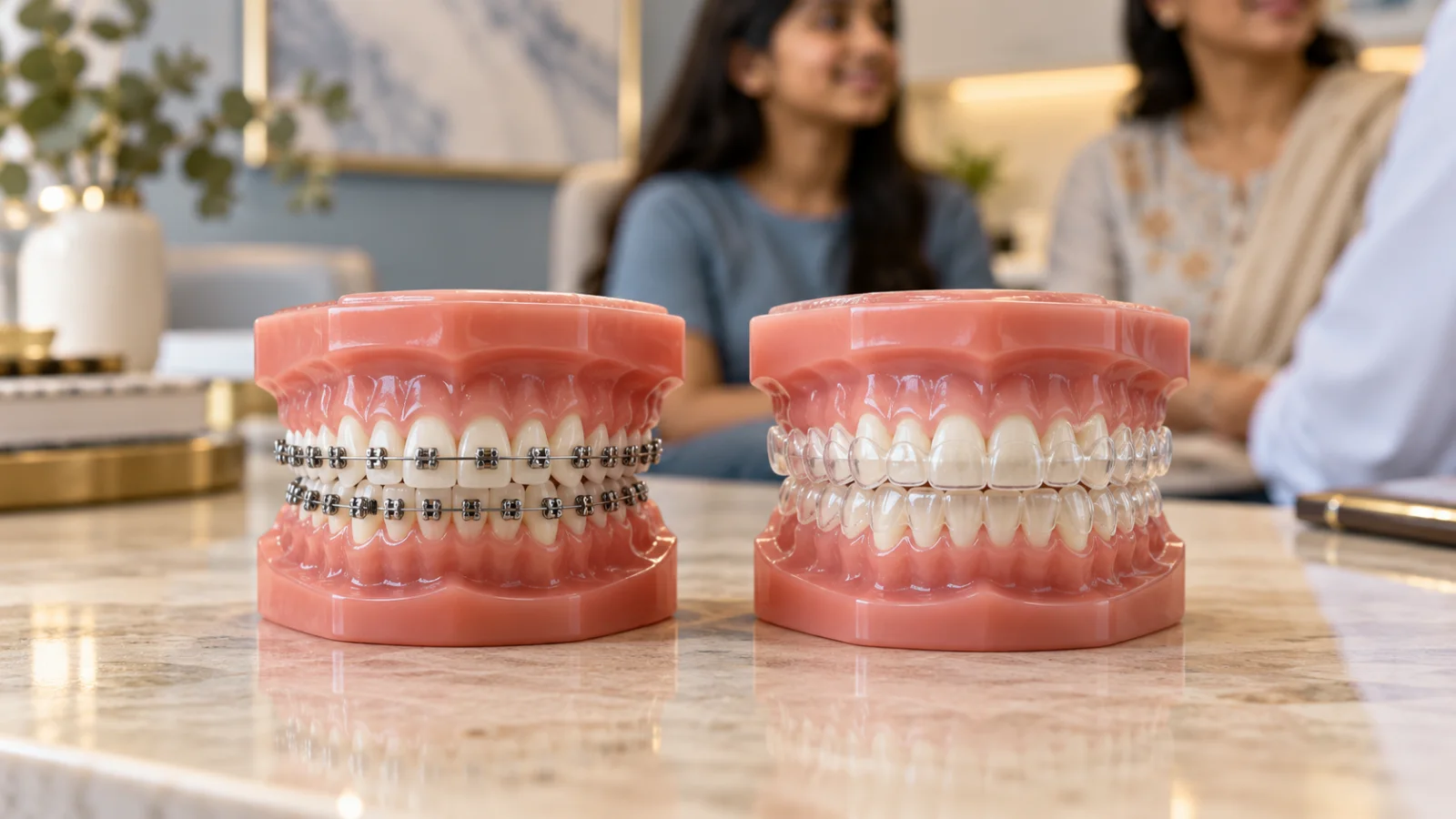
If your child needs orthodontic treatment, you're likely facing a choice that many parents haven't considered before: traditional metal braces or clear aligners. Both can straighten teeth effectively — but they work differently, feel different and suit different children. Here's what you need to know.
How they work
Metal braces use brackets bonded to the teeth, connected by wires that are gradually tightened to move teeth into alignment. They are fixed — the child cannot remove them.
Clear aligners are custom-made, removable trays made from smooth transparent plastic. Each set of aligners is worn for a specified period before being replaced with the next set in the series. Treatment progresses step by step until the teeth reach their final position.
Comfort
This is where aligners have a clear advantage. Metal braces can cause irritation to the cheeks and gums, especially after adjustments. There are no sharp brackets or wires to catch on soft tissue.
Clear aligners are made from smooth plastic and are custom-fitted to the shape of your child's teeth. There may be mild pressure when a new set of aligners is placed (this is normal — it means they're working), but most children find aligners significantly more comfortable than traditional braces.
Aesthetics
Aligners are virtually invisible. For self-conscious teenagers and pre-teens, this is often the deciding factor. Children can smile, socialise and appear in photographs without metal visible on their teeth.
Eating and oral hygiene
With braces, children must avoid certain foods (hard, sticky, chewy) that could damage the brackets. Cleaning around brackets requires extra effort and technique.
Aligners are removed to eat — so there are no dietary restrictions. Brushing and flossing remain completely normal. Aligners themselves are cleaned separately. This makes maintaining good oral hygiene significantly easier during treatment.
Effectiveness
For the majority of orthodontic cases in children and teenagers, clear aligners are just as effective as braces. Complex cases involving significant bite correction may still benefit from traditional braces — this is something Dr. Bhuvanesswari will assess and advise on after examining your child's teeth and jaw.
Compliance
The one area where braces have an advantage: they are fixed, so there is no compliance issue. Aligners must be worn for 20–22 hours per day to be effective. For older children and teenagers who understand the commitment, this is generally not a problem. For younger children, it requires parental guidance and consistent reminders.
Cost
At Care & Cure, Dr. Bhuvanesswari offers aligner options across a range of price points to suit different family budgets. During your consultation, she will explain what options are available for your child's specific case and discuss the most suitable approach.
Which is right for your child?
The answer depends on your child's specific dental needs, age, personality and your family's priorities. The best way to find out is to schedule an orthodontic assessment. Dr. Bhuvanesswari will examine your child's teeth and bite, discuss your goals, and recommend the most appropriate approach — whether that's aligners, braces, or a waiting period before beginning treatment.