
Wisdom teeth — the third molars at the back of the mouth — typically emerge between the ages of 17 and 25. For some adults, they come through without any trouble. For others, they become a persistent source of pain, infection and dental complications. Knowing when to act can save you from a great deal of avoidable discomfort.
Why do wisdom teeth cause problems?
The most common issue is impaction — when a wisdom tooth doesn't have enough space to emerge fully or grows at an angle. An impacted wisdom tooth may push against the neighbouring molar, become trapped beneath the gum, or only partially break through (which creates an opening for bacteria to enter).
Even wisdom teeth that appear to have come through normally can be difficult to clean effectively due to their position at the back of the mouth, making them vulnerable to decay and gum disease.
Signs that you should see a dentist
- Persistent or recurring pain at the back of the jaw
- Swelling around the jaw or gum behind the last molar
- Difficulty opening your mouth fully
- A bad taste in the mouth or bad breath that doesn't resolve with brushing
- Visible swelling or redness of the gum around the emerging tooth
- Headache or earache on one side, in combination with jaw pain
- Pain when biting or chewing
When is removal necessary?
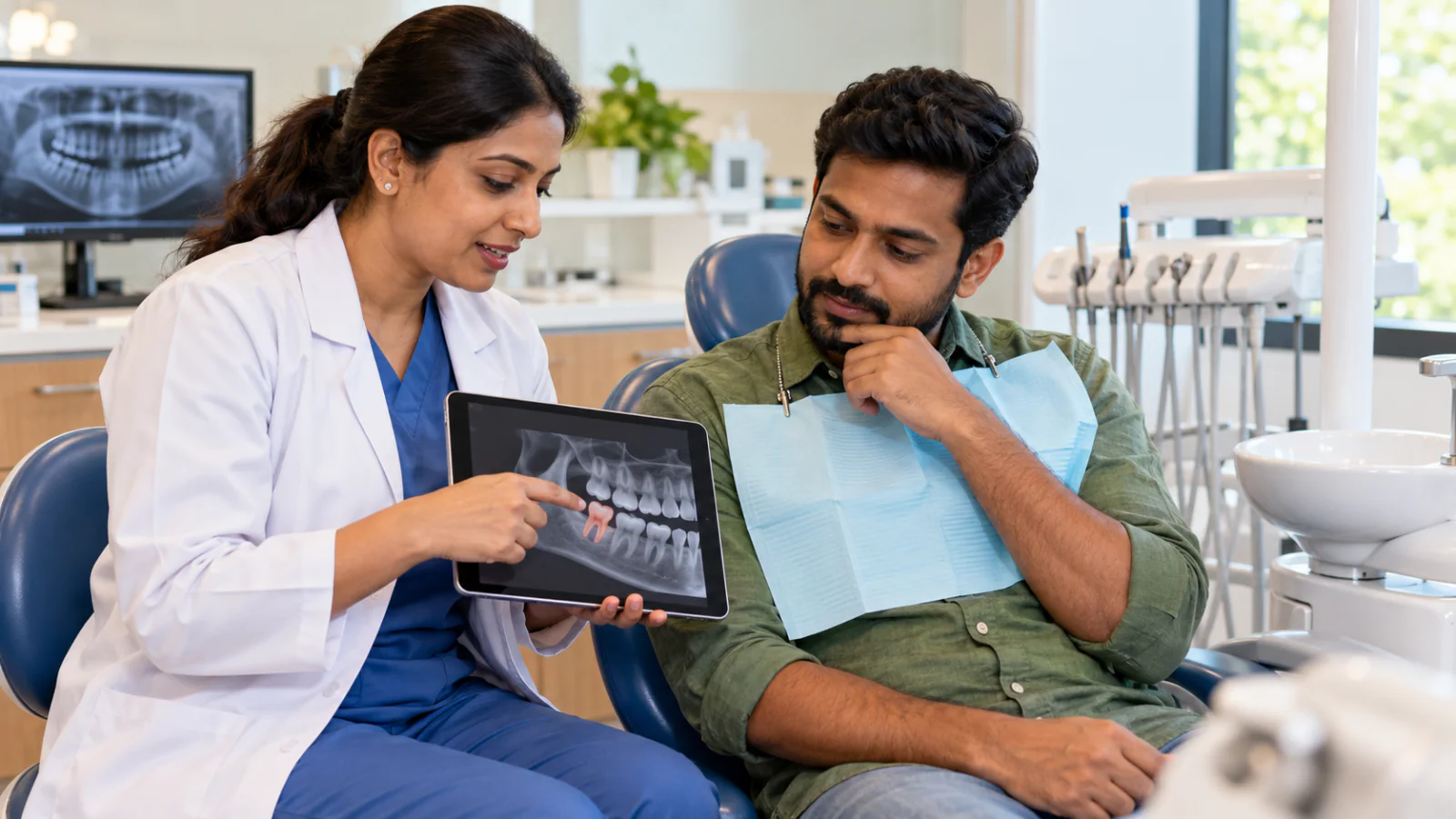
Not every wisdom tooth needs to come out. A dentist will take an X-ray to assess the position, angle and root development of the tooth before making a recommendation. Removal is typically advised when:
- The tooth is impacted and causing pain or damage to adjacent teeth
- A cyst or infection has developed around the tooth
- The partially erupted tooth has caused recurring pericoronitis (infection of the surrounding gum)
- There is significant decay that cannot be treated due to the tooth's position
- The tooth is contributing to crowding or bite problems
What if it's not painful right now?
Some impacted wisdom teeth remain asymptomatic for years. However, problems can develop silently — including bone loss around the adjacent molar, which may only become apparent on an X-ray. This is why wisdom teeth are routinely assessed during dental check-ups, even when there are no current symptoms.
What to expect from a wisdom tooth removal
Straightforward wisdom tooth removal is performed under local anaesthesia and is typically completed in a single appointment. More complex cases — involving deeply impacted or horizontally positioned teeth — are surgical extractions, which require a small incision in the gum. At Care & Cure, all wisdom tooth assessments include an X-ray and a clear discussion of what the procedure involves before any treatment begins.
If you have been experiencing jaw pain, swelling or recurring discomfort at the back of your mouth, book an appointment at Care & Cure Dental Centre, Keelkattalai, for an assessment.